

Increased efficiency and reduced costs are prerequisites for competitiveness in modern industry. This is precisely where smart manufacturing comes in: it is the technological lever that transforms rigid production lines into agile, data-driven ecosystems, making the vision of Industry 4.0 a reality.
- What is smart manufacturing? It refers to the complete digitization of manufacturing through technologies such as IIoT and AI. The goal is networked production that responds to data in real time and optimizes processes autonomously.
- How does it differ from Industry 4.0? Industry 4.0 describes the fourth industrial revolution as an overarching paradigm. Smart manufacturing is the concrete, technological application of this paradigm in the factory floor.
- Which technologies are the drivers? The basis is formed by the Industrial Internet of Things (IIoT) for networking, big data analytics for evaluation, and artificial intelligence (AI) for automating decisions.
- What specific benefits do companies gain? The main advantages are a massive increase in overall equipment effectiveness (OEE), reduced operating costs through predictive maintenance, and greater flexibility in response to fluctuations in demand.
- Is smart manufacturing only relevant for large corporations? No. Thanks to scalable cloud solutions and modular sensor technology, small and medium-sized enterprises (SMEs) can also digitize individual areas of production step by step and cost-effectively.
Definition: Smart manufacturing
The National Institute of Standards and Technology (NIST) defines the term as follows:
Smart manufacturing enables fully integrated, collaborative manufacturing systems that respond in real time to changing requirements and conditions in the factory, in the supply network, and in customer needs.
Smart manufacturing is the integration of advanced technologies (such as AI, IIoT, and big data) into the production process. Connecting machines, sensors, and cyber-physical systems creates a data-driven manufacturing environment. The goal is self-optimizing production that maximizes productivity, reduces costs, and responds flexibly to market changes.
Smart manufacturing: the basics
Smart manufacturing does not exist in isolation, but is the result of technological evolution. In order to strategically classify the concept, it is crucial to distinguish it from related terms:
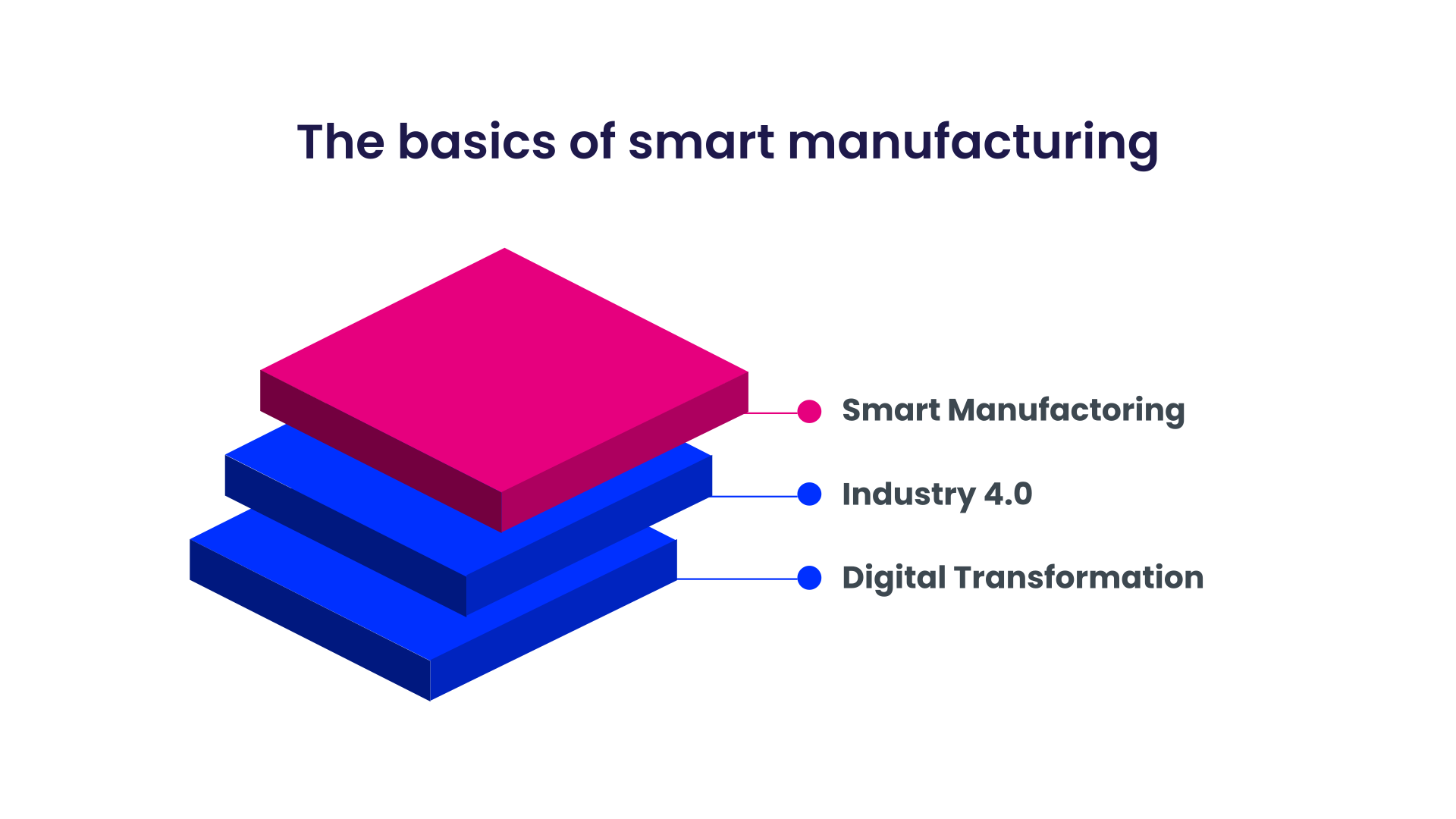
- Digital transformation (the process): This is the overarching strategic process whereby a company integrates digital technologies into all areas of its business in order to transform itself into a data-driven organization.
- Industry 4.0 (The Paradigm): Describes the fourth industrial revolution. It is the vision of a fully networked industrial economy.
- Smart Manufacturing (Implementation): This is the concrete application in the factory floor. It describes what a company implements technically in production (e.g., use of IIoT and AI) to achieve the Industry 4.0 standard.
How does smart manufacturing work?
Smart manufacturing is not an isolated concept, but rather the result of comprehensive developments. And in order to recognise the true potential of smart manufacturing, it is important to understand these developments and how they are connected:
-
Digital transformation is the overarching process that a company undergoes as it evolves into an Industry 4.0 enterprise. It is the strategic endeavor to integrate digital technology into all areas of an organization.
-
Industry 4.0 describes the fourth industrial revolution and stands for the use of smart, digital technologies in manufacturing companies to increase productivity, efficiency, and flexibility.

Smart Manufacturing vs. Smart Factory
Although often used synonymously, the terms differ in their scope:
- Smart Manufacturing (The Process): Refers to the optimization of the entire value chain. This ranges from raw material procurement to production and delivery, and includes supply chains and energy management.
- Smart Factory (The Place): Refers to the physical factory itself. It is a highly automated, networked manufacturing facility in which machines (cyber-physical systems) communicate autonomously and optimize themselves (e.g., through predictive maintenance).
IIoT, AI and big data – the technologies behind smart manufacturing
Smart manufacturing relies on a complex interplay of modern technologies that are closely integrated with one another to enable intelligent, networked and flexible production. Here are some of the key technologies that form the basis of smart manufacturing:
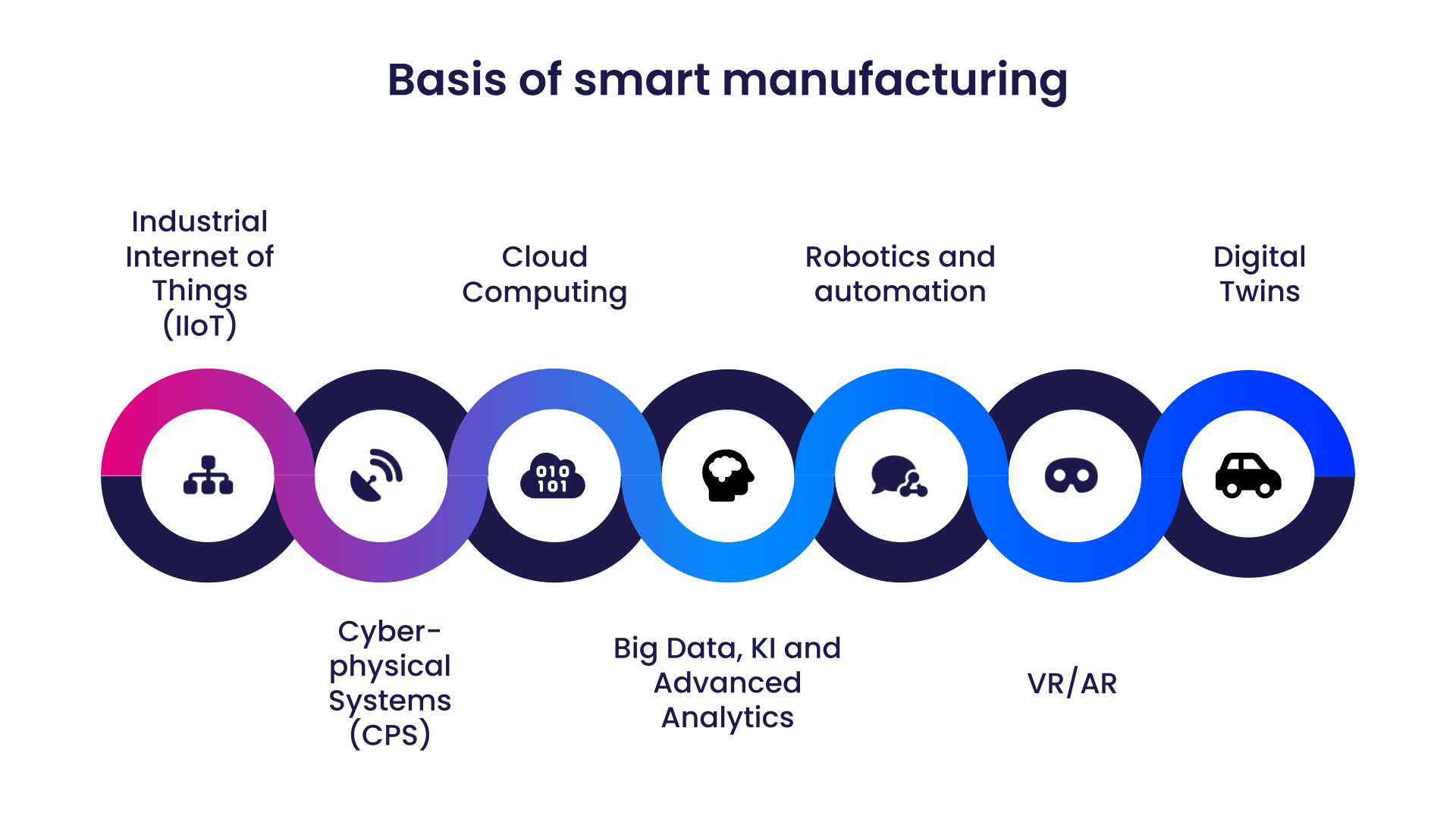
Industrial Internet of Things (IIoT)
The IIoT forms the sensory basis of the smart factory. It connects machines, tools, and products to ensure seamless data collection.
- Function: Automatic collection and transmission of status data.
- Benefits: Enables self-monitoring of systems and is the data source for any further analysis.
Cyber-physical systems (CPS)
CPS are the bridge between the physical factory floor and digital control systems. They connect mechanical components with digital algorithms.
- Function: Seamless integration of hardware and software across networks.
- Benefits: Enables real-time control and autonomous response of production systems to changes.
Cloud & Edge Computing
A scalable IT infrastructure is necessary in order to process the enormous amounts of data flexibly.
- Function: Central storage and computationally intensive analysis of production data (cloud) or fast preprocessing directly at the machine (edge).
- Benefits: Cost savings through scalable resources and global access to production metrics.
Big data, AI and advanced analytics
While big data provides the raw material, AI (artificial intelligence) and machine learning (ML) act as the "brain" of manufacturing.
- Advanced Analytics: Uses historical data for process optimization and quality management.
- AI & ML: Recognize complex patterns, make autonomous decisions, and enable predictive maintenance to prevent failures before they occur.
Robotics and automation
Modern robots are leaving their protective cages and becoming flexible players in manufacturing.
- Collaborative robots (cobots): Work hand in hand with humans and assist with ergonomically difficult or dangerous tasks.
- Benefits: Increased precision and efficiency while maintaining flexibility for batch size 1.
Virtual and augmented reality (VR/AR)
VR and AR expand human perception in production.
- AR (Augmented Reality): Displays real-time information (e.g., repair instructions) directly in the field of vision of technicians (worker assistance).
- VR (Virtual Reality): Enables virtual planning and testing of production lines before physical costs are incurred.
Digital twins
The digital twin is the virtual mirror image of a physical object, a machine, or an entire factory.
- Function: Continuous synchronization of real-time data between model and reality.
- Benefits: Enables risk-free simulations of process changes and detailed monitoring without production downtime.
Smart manufacturing – a kaleidoscope of innovations
Now that we have navigated the jungle of definitions surrounding IIoT, AI, Industry 4.0 and digital transformation, smart manufacturing has become more tangible. It is like a well-oiled clockwork in which all the gears mesh perfectly – except that these gears are made of high-tech components and vast amounts of data.
The result: connected, intelligent manufacturing processes that are flexible, efficient and highly adaptable.
Companies that rely on this are not only fit for the future, but can also react to changes at lightning speed, fulfil customer requirements and strike an elegant balance between costs and quality.

Would you like to know more?
Then take a look at these pages:
Advantages of smart manufacturing
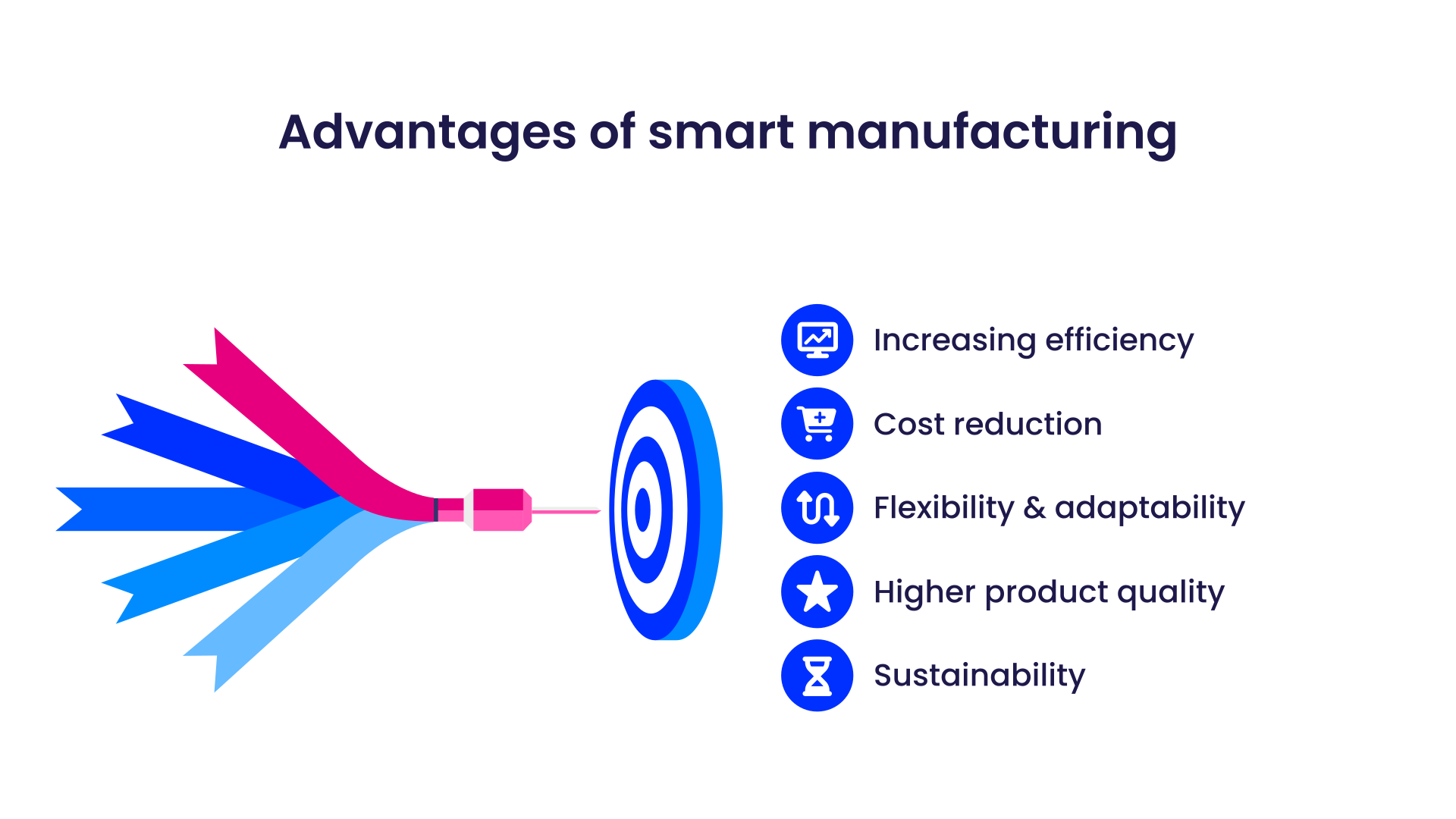
The transformation to a smart factory has a direct impact on key production KPIs. Companies benefit primarily from five factors:
-
Increased efficiency: Connecting machines and automating workflows eliminates idle time and significantly reduces throughput times.
-
Cost reduction (OPEX): Predictive maintenance prevents expensive, unplanned downtime. At the same time, data-based process optimization reduces ongoing operating costs.
-
Flexibility & adaptability: Modular production lines enable a flexible response to market fluctuations. Even individual customer requirements ("mass customization") can be realized without any loss of setup time.
-
Higher product quality: Real-time monitoring detects errors immediately. This reduces waste and rework to a minimum.
-
Sustainability (ESG): Intelligent energy management optimizes resource consumption per unit and actively supports companies in achieving their climate goals.
Challenges on the road to smart manufacturing
The path to the smart factory is complex. In practice, companies usually struggle with five key structural problems:
-
Strategy & Investment (ROI): The high initial costs for infrastructure often clash with unclear responsibilities in management. If there is no clear business case (ROI), the necessary resources for implementation are denied.
-
Technical integration (IT-OT & legacy): Historically developed, individual plant processes make networking difficult. The biggest technical hurdle is often the harmonization of outdated operating technology (OT) with modern information technology (IT) in order to break down data silos.
-
Data quality ("data readiness"): Smart manufacturing requires clean data. Many companies fail to provide sufficient quantities of quality-assured data, without which AI models and analyses are worthless.
-
Cyber security: Every connected sensor increases the attack surface. Without new security concepts (security by design), companies risk production downtime due to cyber attacks or data leaks.
-
Culture & Change Management: Technology alone is not enough. Without early employee involvement, uncertainties lead to resistance, which significantly slows down the adaptation of new processes.
Use Cases – How Companies Implement Smart Manufacturin
How exactly is technology transforming production? The following three use cases illustrate the path from data collection to autonomous optimization.
Condition monitoring
Condition monitoring is the gateway to the smart factory. Sensors continuously record physical parameters such as vibration and temperature to provide a real-time picture of the machine's current health status.
- Function: Networking via IoT gateways and target/actual comparison of machine data.
- Benefits: Immediate alerts in the event of anomalies, increased occupational safety, and transparency regarding the plant status.
Predictive Maintenance
While condition monitoring shows the current status, predictive maintenance forecasts the future. AI algorithms analyze historical data patterns to predict failures before they happen.
- Function: Data-driven calculation of the remaining service life of components.
- Benefits: Maximum machine availability (OEE), predictable maintenance windows instead of ad hoc repairs, and optimized spare parts logistics.
Predictive Quality
With predictive quality, the focus shifts from the machine to the product. The system proactively detects patterns in process data that could lead to quality defects.
- Function: Correlation of real-time production data with quality indicators.
- Benefits: Reduction of scrap and rework ("First Time Right") because parameters are corrected while the product is still on the conveyor belt.
Smart manufacturing: Ready for the future?
Despite the challenges companies face when implementing smart manufacturing, we believe the advantages outweigh the disadvantages. Technologies are constantly evolving, and so are the possibilities. Now is a good time to set the course for the future and further develop your own manufacturing processes. Are you ready to take this step?
FAQs about smart manufacturing
How can smart manufacturing contribute to sustainability?
Through the optimised use of resources, the reduction of energy consumption and waste, and the efficient planning of production processes, smart manufacturing helps companies achieve their environmental goals.
How do I start implementing smart manufacturing in my company?
Start by developing a clear digital strategy that is aligned with your business goals. Identify suitable use cases, select the right technologies and develop a scalable architecture that supports future growth.
How does smart manufacturing differ from traditional manufacturing?
Smart manufacturing uses digital technologies such as IIoT, AI and machine learning to automate, optimise and make production processes more flexible. Unlike traditional manufacturing, it enables real-time adaptation to changing conditions and better integration of production systems.
Albrecht Lottermoser is a Senior Smart Factory Expert at MaibornWolff. The mechatronics and engineering sciences expert specialises in automation, robotics, human-robot cooperation and intelligent process control. He supports organisations and companies in numerous research and industry projects relating to smart factories, digitalisation and artificial intelligence.