

Predictive Analytics
Estimated reading time: 8 minutes

Predictive analytics is a key discipline in the field of data analysis. It draws on historical data to identify patterns and make reliable predictions about future events, behaviour and trends. Whether in marketing, finance or production: those who can best anticipate what tomorrow will bring can make better decisions today.
- What is predictive analytics? Predictive analytics evaluates historical data to identify patterns and predict what is likely to happen in the future – whether in marketing, production or finance.
- What distinguishes predictive from descriptive analytics? Descriptive analytics shows what happened, diagnostic analytics why it happened. Predictive analytics says what is likely to come – prescriptive analytics derives concrete recommendations for action from this.
- What are the benefits of predictive analytics? Better-informed decisions, risks identified early, lower costs thanks to efficient use of resources, well-targeted marketing campaigns and more stable processes along the value chain.
- How does a predictive analysis work? In seven consecutive steps, from the prerequisites through data preparation and modelling to deployment. The process is iterative – steps are repeated.
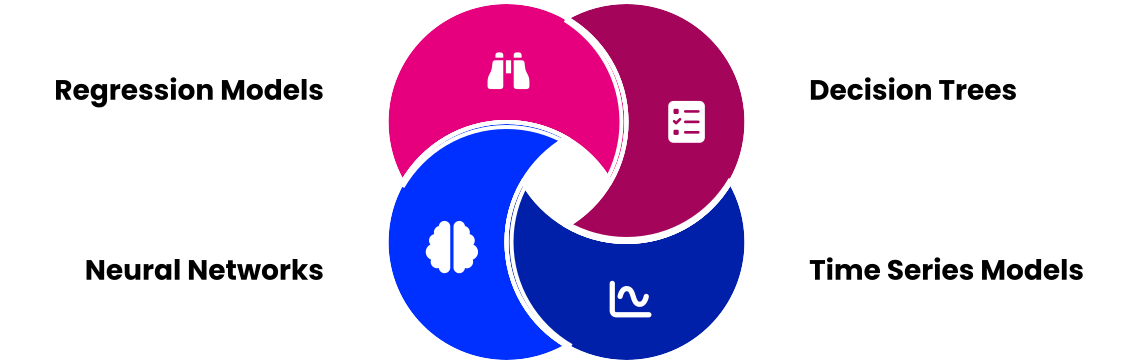
- Which models are used? Regression models, decision trees and random forest, time series models and neural networks. There is no single perfect model – the choice depends on the question and the type of data.
Predictive analytics – definition
Predictive analytics uses data from various sources to predict future events with a high degree of probability. Techniques such as machine learning, artificial intelligence and statistical models can be used for this purpose. Depending on the requirements, events can be considered over a specific period of time – from minutes to years.
Put simply, predictive analysis looks at the past in order to understand the future. Instead of just analysing what happened (descriptive analytics) or why something happened (diagnostic analytics), predictive analytics answers the question: What is likely to happen in the future?
Good to know: Prescriptive analytics goes one step further than predictive analytics. Prescriptive analytics uses predictions to provide concrete recommendations for action for the future.
Areas of application for predictive analytics
Predictive analytics can be used in almost every industry to reduce risks, optimise processes and increase revenue. Typical fields of application:
- Marketing: recognise purchasing patterns in customer behaviour, segment target groups, personalise offers
- Mechanical engineering: Predictive maintenance – identify maintenance requirements early on from sensor data, avoid unplanned downtime
- Medicine: identify high-risk patients, forecast the course of diseases, select therapies
- Finance: predict credit risks, cross-selling and upselling potential and the likelihood of customer churn
- Climatology & meteorology: predict weather phenomena, model the climate, assess risks of natural disasters
Predictive analytics – benefits at a glance
Predictive analysis is a powerful tool for making data-driven decisions. Predictive analytics offers the following benefits:
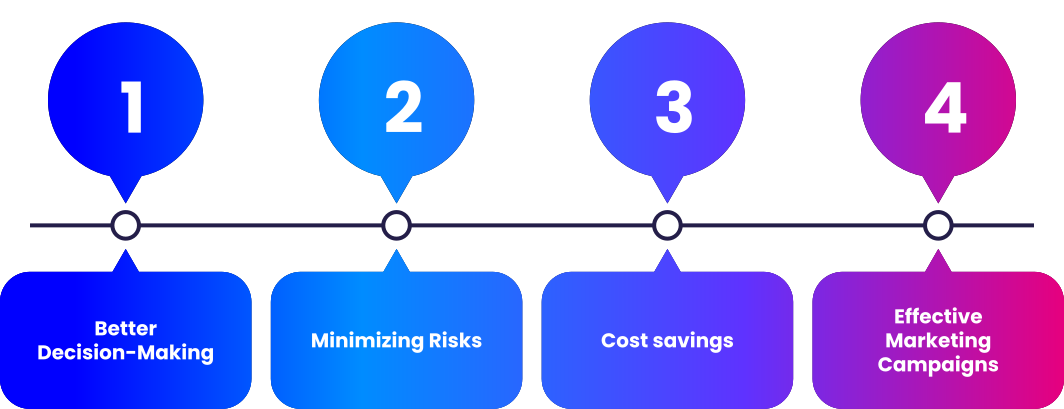
- Better decision-making: Predictive analytics provides a well-founded basis for decisions built on concrete data models.
- Minimising risks: By analysing selected data, potential risks such as payment defaults, fraud or technical faults can be identified and avoided at an early stage.
- Cost savings: Precise forecasts enable the efficient use of resources.
- More efficient marketing campaigns: Predictive analytics helps to tailor marketing campaigns to specific target groups – with the right offer at the right time.
How does predictive analytics work?
Predictive analytics is an iterative process, i.e. the desired result is approached in several runs – so the individual steps may be repeated. The aim of every predictive analysis is to develop a reliable prediction model from raw data that supports the business.
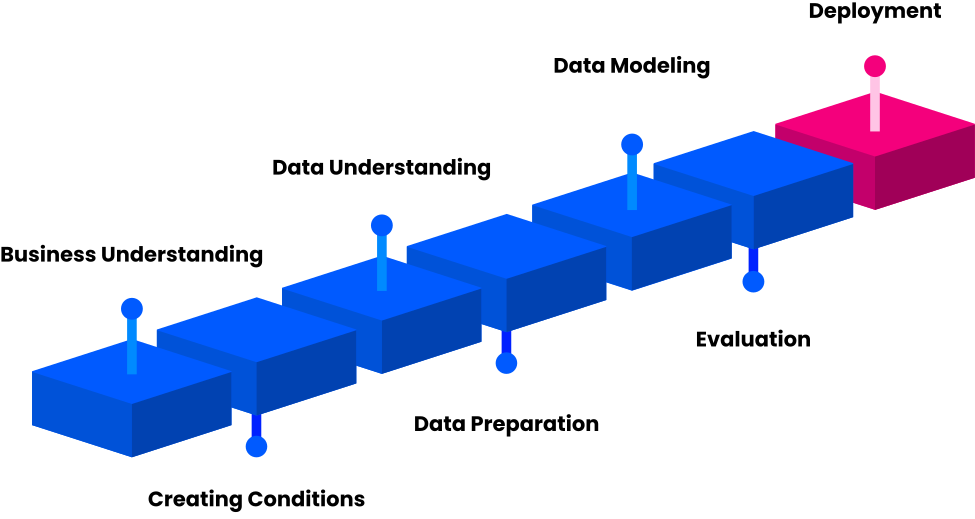
1. Business understanding
First, you clarify which business problem you want to solve. To do this, try to describe the problem and the answers you are looking for in increasing detail – for example:
- Can predictive analytics help to improve machine maintenance?
- Is it possible to predict whether a fault will occur soon based on sensor data from the last 4 weeks?
2. Creating the prerequisites
Certain prerequisites must be met for any predictive analysis:
- Data: As much relevant, high-quality data as possible is required to make a reliable forecast. A professional data management system is crucial here.
- Suitable infrastructure: This is about where and how data is stored. Depending on the size of the company and the way it works, either large data warehouses or small databases are suitable.
- Employees: Experts are needed who can analyse the data and draw the right conclusions from it. In addition to data experts, you also need specialists who understand the underlying business problem and IT teams who can handle the technical implementation.
3. Data understanding
In the next step, all available data is analysed:
- What data is available?
- In what quality and in what format is it available?
- Is the data relevant to the defined business problem?
Please note: Not all available data is useful. It should always have a clear connection to the objective of the analysis. If, for example, you want to forecast your customers' purchasing behaviour, click paths and shopping basket histories are more helpful than general weather data – unless weather data demonstrably influences purchasing behaviour (e.g. for outdoor products).
4. Data preparation
The selected data is cleansed, standardised and prepared so that it can be used for modelling. This involves the following tasks:
- Incorrect or duplicate records: Typos, duplicates or technical errors can impair the quality of the model. They should therefore be identified and consistently removed.
- Missing values: If data fields are empty or incomplete, they must be sensibly filled in or removed.
- Format alignment: To enable consistent analyses, formats such as dates, currencies or units of measurement are standardised.
5. Data modelling
The predictive analytics model is now created from the prepared data – the mathematical basis for reliable forecasts. The modelling process works like this:
- Select model candidates and algorithms: Data scientists check which modelling approach suits the question and the data structure.
- Split data into training, validation and test sets: This prevents the model from only responding to data it already knows.
- Experiment with features and parameters: Settings, feature combinations and algorithms are varied until the model's predictions improve.
- Select the best model candidate: Defined metrics such as accuracy, error rate and interpretability are decisive.
6. Evaluation
Before a prediction model is implemented, it must be thoroughly tested. The key questions are:
- Does the model help to solve the defined business problem and deliver the desired answers?
- Does it provide useful and comprehensible predictions?
- Do the results offer added business value?
Depending on the result, you should either go back to the previous step (data modelling) or move on to the next step (deployment). As a rule, evaluation is not the end, but often the starting point of an optimisation loop.
7. Deployment
Once the prediction model has been evaluated and approved, it moves into the final phase: deployment. The model is integrated in such a way that it can be used in day-to-day business – whether automated in the background or as part of a dashboard, report or system.
Good to know: Prediction models must be regularly adjusted and retrained in order to deliver reliable results over the long term.
Depending on the use case, deployment can mean:
- The results are compiled in a report that is regularly sent to decision-makers.
- The model is integrated into a CRM or ERP system so that predictions feed directly into work processes.
- A web app or API delivers predictions in real time (e.g. for personalised product recommendations).
Rely on MaibornWolff and benefit from predictive analytics.
What is predictive analytics? Proven models
There is no single perfect model in predictive analytics. Different methods are used depending on the question, the type of data and the objective. It is best to try out different models in order to choose a suitable one.
Regression models
Regression models are used to examine the relationship between a target variable (dependent variable) and one or more influencing factors (independent variables). They are particularly suitable for quantitative predictions. Regression models are often used for sales forecasts, for example. Here, the target variable might be revenue in € per month, while influencing factors can include the average basket value and the number of products sold in the previous month.
Decision trees & random forest
Decision trees are used to visualise information and thus make sound decisions. Random forest combines several decision trees to deliver even more accurate results.
Decision trees and random forest are particularly useful when it comes to deriving rules for decisions (e.g. which customers are likely to churn?).
Time series models
Time series models (e.g. ARIMA) analyse data points in chronological order. They are ideal for predictions based on seasonal or recurring patterns: e.g. how will electricity demand develop in the next quarter?
Neural networks
These particularly powerful models are able to recognise complex patterns and correlations – even in huge, unstructured data sets. They are used, for example, in image processing or in language models.
Predictive analytics with MaibornWolff
Many companies today have large volumes of data. In practice, however, the predictive potential of this data often remains untapped. There are various reasons for this – from a lack of strategic goals and inconsistent data to inadequate technical infrastructure.
This is exactly where MaibornWolff comes in, in these and similar cases. We support our customers throughout the entire predictive analysis. Our proven approach looks like this:
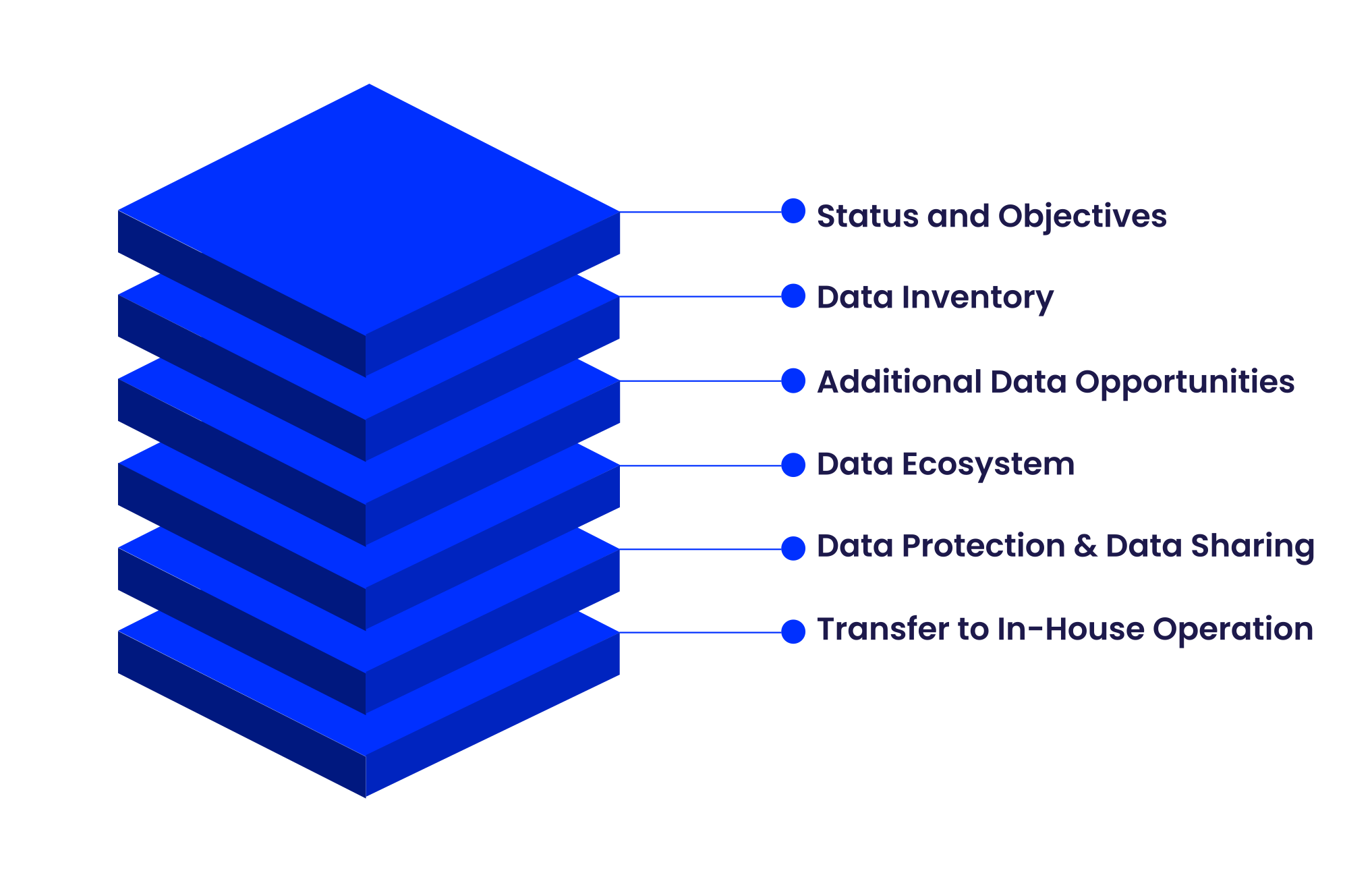
- Status and target analysis: Together, we clarify what goal you are pursuing with predictive analytics.
- Inventory of existing data: You provide your data, and our data experts check what insights it already contains and what it is suitable for in predictive analyses.
- Identification of additional data potential: Using data thinking, we evaluate whether further data sources – internal or external – can provide additional insights.
- Development and operation of the data ecosystem: We take care not only of the model, but also of the right infrastructure. Together, we develop a sustainable analytics ecosystem.
- Data protection and data sharing: Right from the start, we ensure clear access rights, visibility rules and governance structures. In doing so, we lay the foundation for secure data sharing.
- Handover to in-house operation: We work in mixed teams with our customers. Our goal: to enable your teams to further develop and operate the product independently after the project has ended.
Using predictive analytics to make decisions today for tomorrow
Predictive analytics is a useful tool that allows companies not only to analyse their data retrospectively, but to actively use it to minimise risks, optimise workflows and make well-founded decisions for the future. With a well-thought-out approach – from goal setting and model development to implementation in day-to-day business – companies secure a real competitive advantage.
Arrange a free consultation on predictive analytics.
Frequently asked questions about predictive analytics
What are predictive methods?
Predictive methods are analytical techniques used to predict future events or developments on the basis of historical data. They include e.g. regression analyses, decision trees, time series analyses and neural networks. They identify patterns in the data and use them to derive probabilities for future events – whether in marketing, production or finance.
How complex is it to implement a predictive analysis in a company that is just starting out in this area?
Implementing a predictive analysis can be complex, especially for companies with no previous experience. MaibornWolff supports companies throughout the entire process: from identifying suitable use cases through proof of concept and MVP to productive operation. Business and data science work together iteratively to develop practical, professionally aligned and robust models for the long term.
Kyrill Schmid is Lead AI Engineer in the Data and AI division at MaibornWolff. The machine learning expert, who holds a doctorate, specialises in identifying, developing and harnessing the potential of artificial intelligence at the enterprise level. He guides and supports organisations in developing innovative AI solutions such as agent applications and RAG systems.