
Smart Factory – the production work of the future
Estimated reading time: 8 minutes

The most important points at a glance
- What is a Smart Factory? A connected production environment that autonomously learns and optimizes processes in real time thanks to IIoT and AI. It connects machines, products, and people into an intelligent, highly flexible overall system for Industry 4.0.
- What benefits does it offer? It reduces operating costs through predictive maintenance and measurably increases overall equipment effectiveness (OEE). Real-time data analysis improves product quality while enabling maximum agility in manufacturing.
- How is implementation achieved? The path leads through a maturity assessment and targeted pilot projects (PoCs) toward a scalable solution. MaibornWolff focuses on the individual technological optimum rather than unreflective full digitalization.
- Where are the challenges? Critical factors include the integration of legacy systems (brownfield), cybersecurity, and above all cultural change. Successful projects require active change management to engage the workforce in new digital ways of working.
- What technology is behind it? IIoT forms the communication backbone, while cyber-physical systems merge the physical and digital worlds. AI models and digital twins enable precise simulations and well-founded, data-driven decisions.
Smart Factory – definition: your path to industry 4.0
Connected intelligence as the new standard
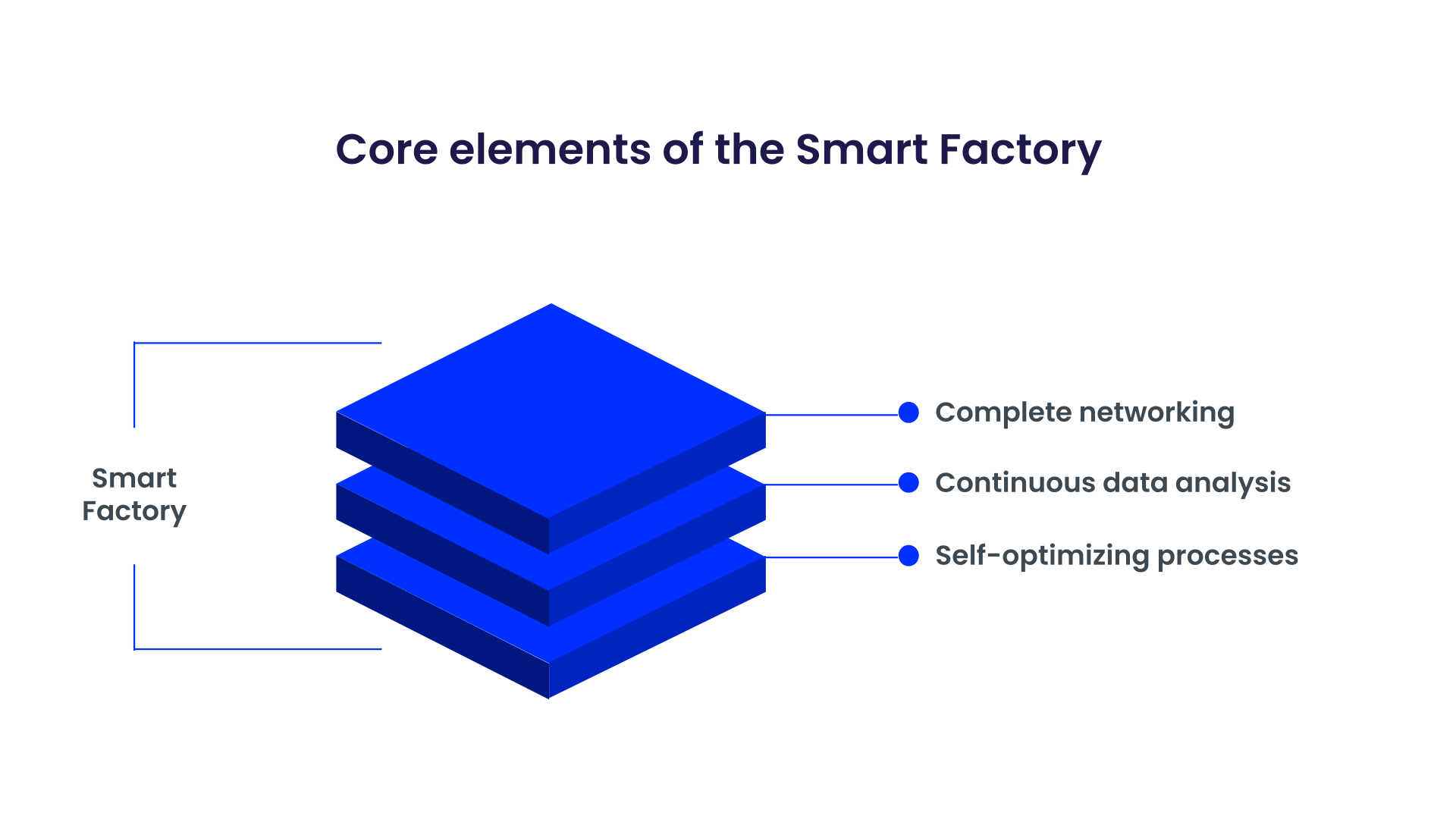
As a central element of Industry 4.0, the smart factory connects machines, products, and people in real time via IIoT.This communication enables the environment to autonomously optimize production processes and respond flexibly to market changes.
Here, IT and manufacturing technology merge into cyber-physical systems that go far beyond conventional automation. Through the use of Big Data and AI, a digital ecosystem emerges that continuously improves itself.
Saying goodbye to data silos and rigid processes
While traditional factories often struggle with isolated systems and inflexible maintenance intervals, Industry 4.0 provides full transparency. Real-time data makes it possible to detect problems before they disrupt operations.

Benefits and potential for companies
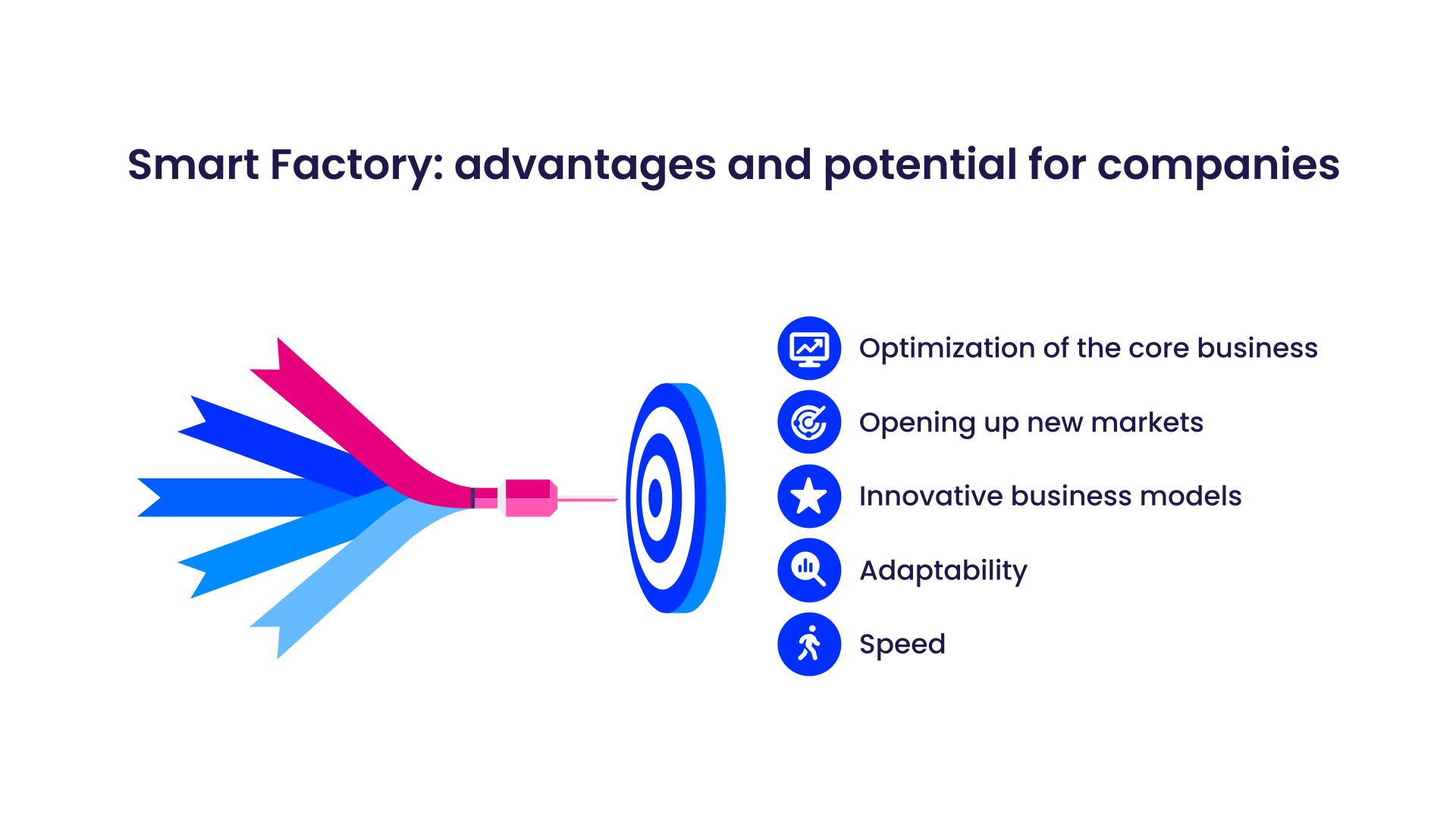
Around 95% of companies see Industry 4.0 technologies as a decisive opportunity for their future viability. The smart factory optimizes the core business and opens up new markets and innovative business models through data.
Cost efficiency through predictive maintenance
Smart factories reduce operating costs through precise resource management and the minimization of unplanned downtime. A key tool is predictive maintenance based on condition monitoring.
MEMS sensors capture vibrations and temperatures in real time. AI algorithms identify anomalies before a failure occurs, significantly increasing overall equipment effectiveness (OEE) and extending machine lifespan.
Agile production and market adaptation
Thanks to modular production lines and AI-powered demand forecasting, companies can respond to market trends at lightning speed. This shortens time-to-market and enables cost-efficient manufacturing of individualized customer requirements.

Material forecasts brought to the point: Our platform uses machine learning for highly accurate demand forecasting in industrial manufacturing. Siemens benefits from optimized inventory levels, reduced overproduction, and excellent delivery reliability—efficient and consistently data-driven.
Resource efficiency and ecological sustainability
Intelligent energy management systems control consumption in real time and prevent costly peak loads. This reduces operating expenses while simultaneously lowering the company’s overall CO₂ footprint.
Predictive maintenance conserves resources through demand-based spare parts replacement. More precise planning also minimizes overproduction and material consumption in line with sustainable green IT.

The technological foundations of the smart factory
The intelligent factory digitally connects all elements of the value chain. At the center are smart production and smart maintenance as the foundation for autonomous business processes.
The interaction of IIoT (Industrial Internet of Things) and artificial intelligence enables efficient manufacturing, in which humans take on a strategic role. Discover which technologies form the basis of this foundation.
Connectivity and digital data collection
IIoT forms the backbone of connectivity. Through cyber-physical systems (CPS), physical objects are seamlessly connected with the digital world.
Sensors on machines and products enable continuous real-time data collection. Smart products “know” their exact status and position within the process at any time.
Electronic device records (eDHR) completely replace paper-based documentation. This enables seamless, digital documentation of all relevant production and maintenance data.
AI-based analysis and simulation
Artificial intelligence (AI) analyzes generated big data volumes to classify complex system states. Machine learning identifies correlations that enable precise quality prediction and process optimization.
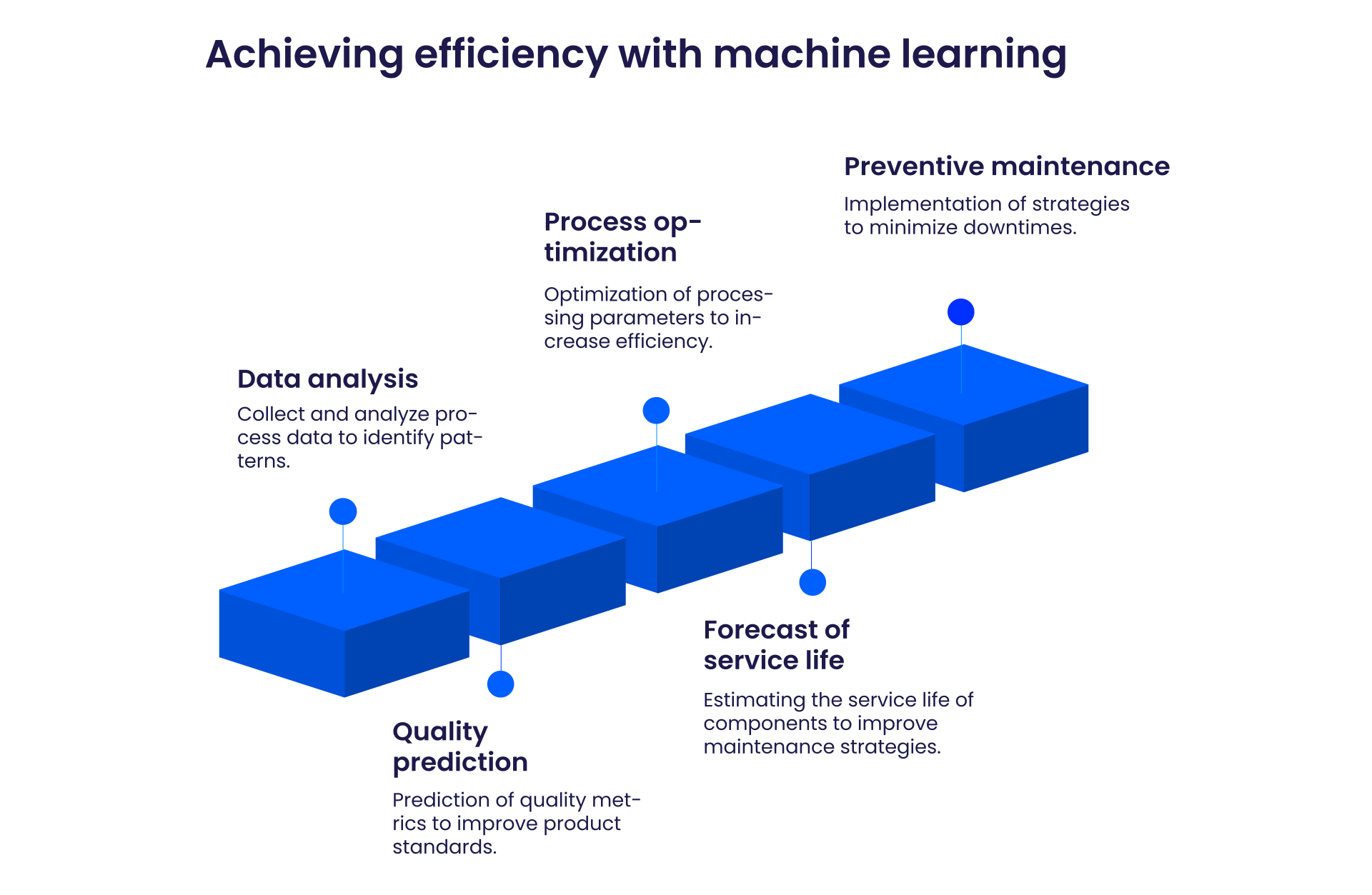
A digital twin acts as a virtual representation of physical systems for simulations and real-time analysis. Complementing this, a data mesh enables decentralized data management. This improves decision-making and promotes data qualityacross all business units. As a result, unplanned downtime can be minimized through predictive strategies.
Robotics and decentralized computing power
Industrial robots and cobots increase efficiency through precise tasks or direct collaboration with humans. Mobile robots and drones also autonomously inspect hard-to-reach areas.
The hybrid architecture combines local responsiveness with global scalability. This ensures rapid monitoring and supports the development of long-term maintenance strategies.
- Edge computing: Processes critical data directly at the machine without latency.
- Cloud computing: Enables cross-site optimizations and complex big data analyses.

Find out what you need to consider when introducing AI into production! Available in German language.
Overcoming challenges: pitfalls on the path to the smart factory
Connectivity within Industry 4.0 offers enormous opportunities but also brings complex challenges. Companies that address technical barriers and cultural resistance early can turn potential pitfalls into real stepping stones for digital transformation.
Technological barriers and cybersecurity
Older machine fleets (brownfield environments) without modern interfaces often make interoperability between heterogeneous systems difficult. To eliminate data silos, clean preparation of the data foundation and the integration of modern sensor technology are essential.
At the same time, increased connectivity raises the risk of cyberattacks on the production layer. Robust security concepts and a high-performance, scalable infrastructure therefore form the indispensable backbone of every intelligent factory.
- Lack of standardization for interfaces and protocols.
- High susceptibility to disruptions in complex system architectures.
- Need for deep technical expertise.
- Requirement for a high-performance data infrastructure.
Organizational change and upskilling
A smart factory requires a profound cultural shift. Active change management engages employees early and transforms rigid hierarchies into agile, cross-functional teams.
The convergence of IT and operational production significantly changes job roles and skill requirements. Targeted upskilling programs are necessary to prepare professionals for managing and maintaining highly complex digital systems.
- Breaking down silos between IT and operational departments.
- Establishing agile decision-making structures and work processes.
- Transparent communication of the overall digital strategy.
- Active participation of the workforce in shaping the transformation.
The path to the smart factory in three phases
Digitalization increases efficiency but often fails due to isolated planning processes and unstructured data. A smart factory is not a product you can simply buy—it is the result of a holistic transformation journey.
Analysis and strategy development
An IIoT solution assessment identifies the digital maturity level as well as the organization’s strengths and weaknesses. Existing technologies, processes, and employee competencies are objectively evaluated.
Based on this, a roadmap with concrete measures and a well-founded ROI calculation is developed. The establishment of open standards ensures seamless communication between all systems.
Technology integration and data strategy
Instead of a one-size-fits-all approach to digitalization, MaibornWolff strives for a customized solution. The focus is on scalable technologies that can be seamlessly integrated into the existing IT landscape.
A comprehensive data strategy ensures availability through a unified namespace. Proofs of concept (PoC) validate the practical feasibility of solutions such as predictive maintenance under real-world conditions.
Knowledge development and continuous optimization
The success of the transformation depends on the active involvement of the workforce. Early communication and targeted training in the use of new technologies foster a future-oriented corporate culture.
The smart factory is an agile process that is continuously optimized through regular adjustments. A modular architecture enables step-by-step expansion and the iterative learning of the deployed AI models.
Smart factory example: The iProcess app at Volkswagen
Real data beats gut feeling. Together with Volkswagen, we developed the iProcess app to make production metrics available in real time directly at the point where they are generated.
The mission: transparency in the brownfield
The challenge was to map complex production processes in an intuitive, web-based application. At the same time, seamless integration into the existing IT infrastructure under the highest security standards had to be achieved.
- Development of a robust backend infrastructure for real-time data
- Implementation of advanced security measures and access controls
- Integration of numerous interfaces with existing production systems
The result: data-driven decisions
Today, real-time visualization ensures maximum transparency and error-free data collection. Management now makes decisions based on precise metrics rather than estimates.
This significantly reduces manual input errors and enables dynamic adaptation to production changes. In this way, the vision of an intelligent, highly responsive factory becomes a lived reality in manufacturing.
Your partner for the production of the future
The smart factory is not a distant dream—it is the decisive lever for your future viability. MaibornWolff supports you holistically—from optimizing existing processes to implementing complex digitalization concepts. Together, we unlock the potential of your data for a future-ready, autonomous manufacturing environment.

Frequently asked questions about the smart factory
Is a Smart Factory Also Worth It for Existing Facilities (Brownfield)?
Yes. Most projects do not start from scratch but integrate existing machine fleets. Through cost-efficient retrofitting with modern sensors, older systems can also become IIoT-enabled.
This makes it possible to gain valuable data without having to replace the entire machine park. In an assessment, we identify exactly those components whose connectivity promises the highest ROI.
How Secure Is Connected Production Against Cyberattacks?
Security is not an afterthought—it is the foundation. With the convergence of IT and OT (Operational Technology), the requirements for robust security architectures increase significantly.
We rely on comprehensive security concepts and continuous monitoring of data flows. This protects your sensitive production data and prevents costly downtime caused by external manipulation.
Is a Smart Factory Only Economically Viable for Large Enterprises?
No. Thanks to modular cloud solutions and scalable IIoT platforms, medium-sized companies can also benefit. The key is to start with targeted pilot projects (MVPs) that quickly deliver measurable results.
With this iterative approach, you distribute investment risks and learn directly from the first live data. An intelligent factory grows with your requirements and your budget—step by step.
Albrecht Lottermoser is a Senior Smart Factory Expert at MaibornWolff. The mechatronics and engineering sciences expert specialises in automation, robotics, human-robot cooperation and intelligent process control. He supports organisations and companies in numerous research and industry projects relating to smart factories, digitalisation and artificial intelligence.