One image shows a modern factory with a conveyor belt on which robotic arms are working on a cloud, symbolizing IoT Operations.

Building a smart factory platform using Azure IoT Operations

From a solution assessment to a productive Minimum Viable Product (MVP)
BMW Group Logo
DeutscheBahn_logo-2
Creditreform Logo
DERTOUR
jochen-schweizer
Dräger Logo
kuka
BMW Group Logo
DeutscheBahn_logo-2
Creditreform Logo
DERTOUR
jochen-schweizer
Dräger Logo
kuka
ProSieben_Logo_2015-2
Mercedes
Volkswagen Logo
DEKRA
stihl
Sonax_logo
Weidmüller logo
Das Logo der Bundesagentur für Arbeit
ProSieben_Logo_2015-2
Mercedes
Volkswagen Logo
DEKRA
stihl
Sonax_logo
Weidmüller logo
Das Logo der Bundesagentur für Arbeit
HomeServicesIoTAzure IoT Operations

Streamline Production with Azure IoT Operations

Modern factories produce vast amounts of data. But, bringing that data to good use, to optimize planning, streamline production and gain deeper insights into processes to optimize them, remains a challenge.  We explain how data operations tools like Azure IoT Operations can help to transform raw production data into valuable information for manufacturing companies.

Transforming raw data into information

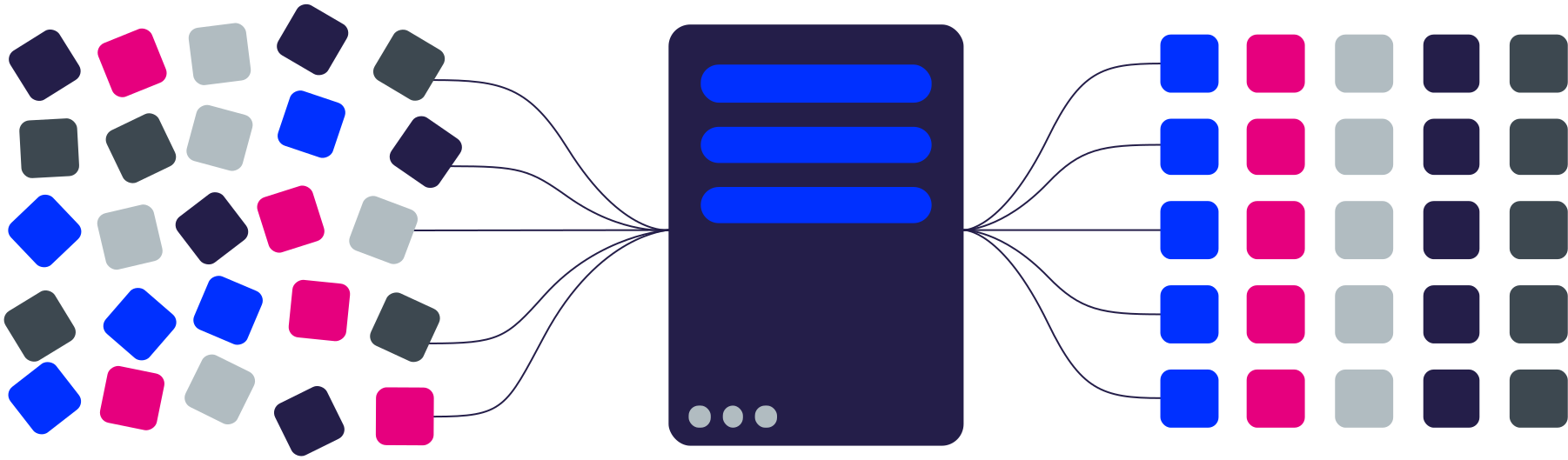
An abstract illustration symbolizes the conversion of raw data into information

Modern manufacturing sites with oftentimes complex automated production processes produce terrabytes of data, sometimes daily. Just storing the raw data in a database or a datalake and trying to extract insights out of it is time consuming, causes a lot of effort and is a potential roadblock for fast realization of digital use cases.

The problem with raw process data is, that it is not normalized or standardized and often lacks context. Although a single process value can be used for simple monitoring, deeper insights can only be gained if process values can be correlated with other data and information like machine failures, environmental data or order information.

Normalization helps, when it comes to analyzing the data: Naming conventions, standardized units and timestamps allow data scientists to do their work more efficiently. They might not have a direct connection to the process. Therefore, they need additional context such as the units of measurement of the datapoints and a clear assignment to the data sources.

The following steps show, how connectivity solutions can help to improve data quality to enable data driven use cases:

Diagram illustrating different types of data that can be stored in a database, including text, numbers and images.

With machine connectivity solutions that provide means to transform and normalize data like Azure IoT Operations, we can abstract from the differences between the plants and machine manufacturers and reduce the effort required to roll out use cases to other plants.

Efficient data processing and networking

Connect & Get Data

Getting access to the raw data is the first step. Connectivity solutions support machine protocols to directly connect to the machines, e.g. via OPC-UA.

Transform & Normalize

In the transformation and normalization step, raw data can be transformed to common units of measurement and defined data types.

Standardize

The use of standard data models helps to abstract from the differences between machines from different generations or different manufacturers. This step is crucial to harmonize data from different sites and to allow for scalability of faster roll-out.

Publish to Unified Namespace (UNS)

By publishing normalized and standardized data to a UNS, this data gets additional context from the topic hierarchy. It is easily accessible for other interested clients and systems in a company and allows for faster problem solving and use case realization.

Portrait of Ansley Yeo
MaibornWolff has been instrumental in shaping our product journey. Their commitment to sharing deep technical, industrial knowledge and providing invaluable feedback through testing has been pivotal in shaping Azure IoT Operations.
Ansley Yeo, Principal Program Manager, Microsoft

Building a data plane with Azure IoT Operations

Machine connectivity

We leverage machine connectivity tools that can connect directly to machines and processes and provide data transformation and normalization as close to the data source as possible. The use of standardized data models to harmonize data for example across similar machines from different manufacturers is another feature.

Standardized data level

UNS based architecture

Collaboration with Microsoft

Azure Logo

We have worked closely together with Microsoft during the development of Azure IoT Operations and continue to do so. From our work with manufacturing clients, we know what they want and need to make better use of their production data. We shared our learning with the Microsoft product group at an early stage and provided constant feedback during the development and private preview phases. Due to this collaboration, we already possess deep knowledge about Azure IoT Operations.

Diagram showing the most important elements of the cloud infrastructure, showing the components for storage, processing and connectivity.
Azure IoT Operations Architecture. Source: Microsoft

Key features of Azure IoT Operations

It is built from ground as a Kubernetes-native application.

It Includes an industrial-grade, highly available and scalable MQTT broker that powers event-driven architectures and can form the foundation for a Unified Namespace.

It is highly extensible, scalable, resilient, and secure.

It lets you manage edge services and resources from the cloud by using Azure Arc.

It can integrate customer workloads into the platform to create a unified solution.

It supports a GitOps- and IoC-based approach for deployment and configuration.

It natively integrates with Azure Event Hubs, Azure Event Grid’s MQTT broker, and Microsoft Fabric in the cloud.

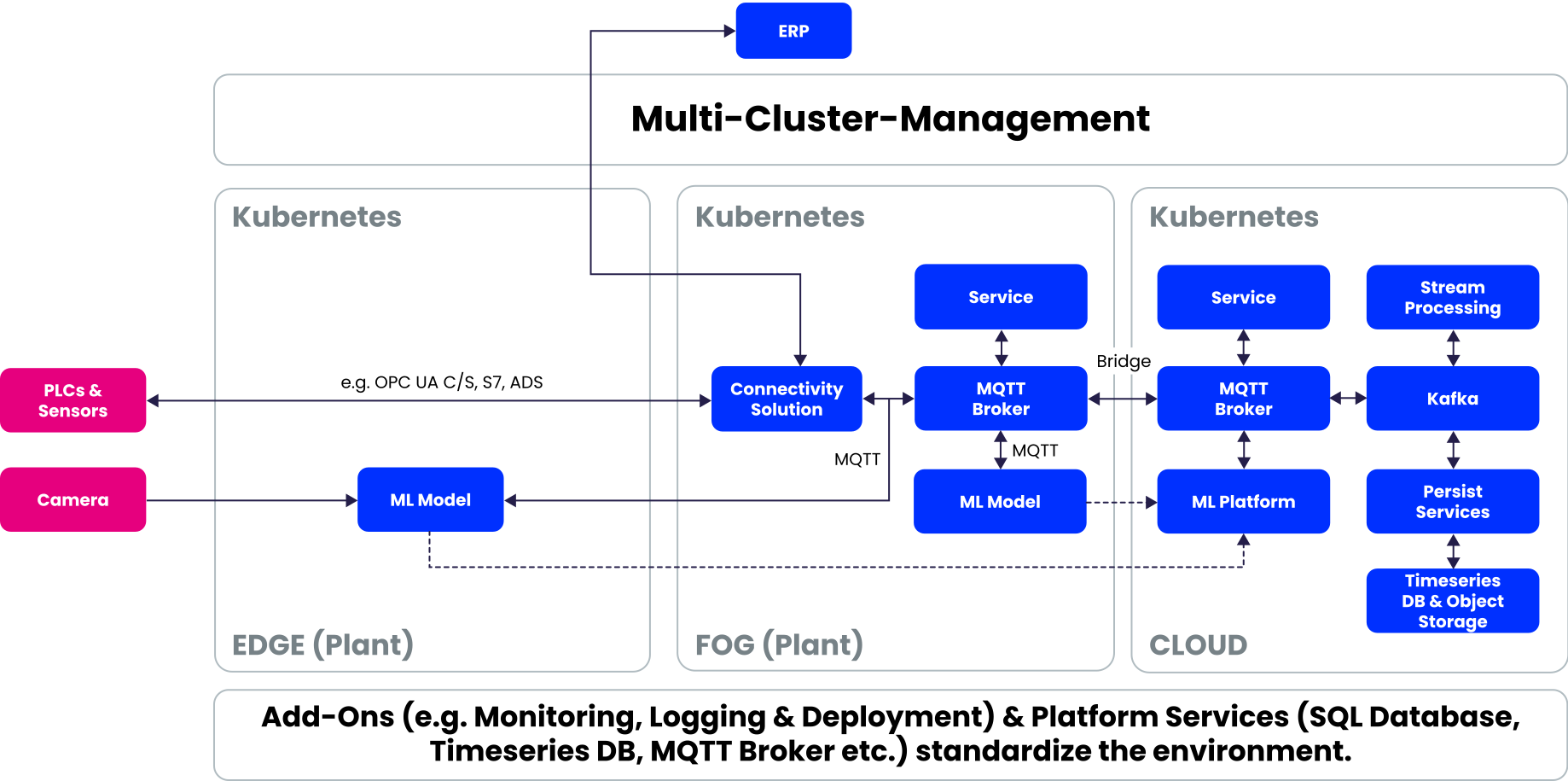
Architecture diagram illustrating the MPC - Cutter Management System and detailing its components and interactions.

Building a Smart Factory is more than connecting machines

When working together with our customers on their Smart Factories, a fit gap analysis is always part of our approach. We take a close look at the existing application landscape and examine if tools like Azure IoT Operations can fill the gaps or if additional components are necessary for example to connect to legacy devices, that do not provide their data via OPC-UA.

Even though quality data is the basis for actionable insights, building a Smart Factory is more than connecting machines, and providing access to data. Besides the data layer the infrastructure is key success factor for digital transformation and has significant influx on the operability, scalability and security of the Smart Factory.

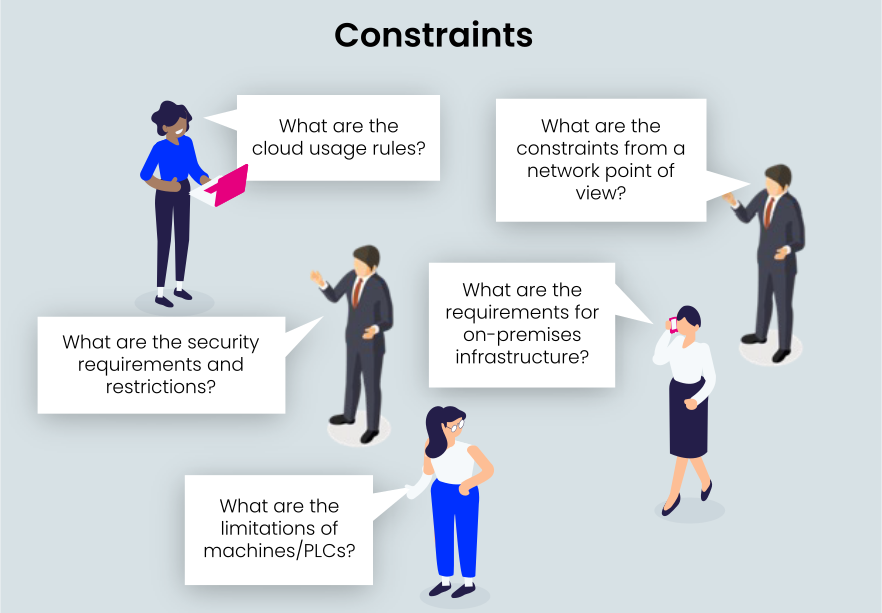
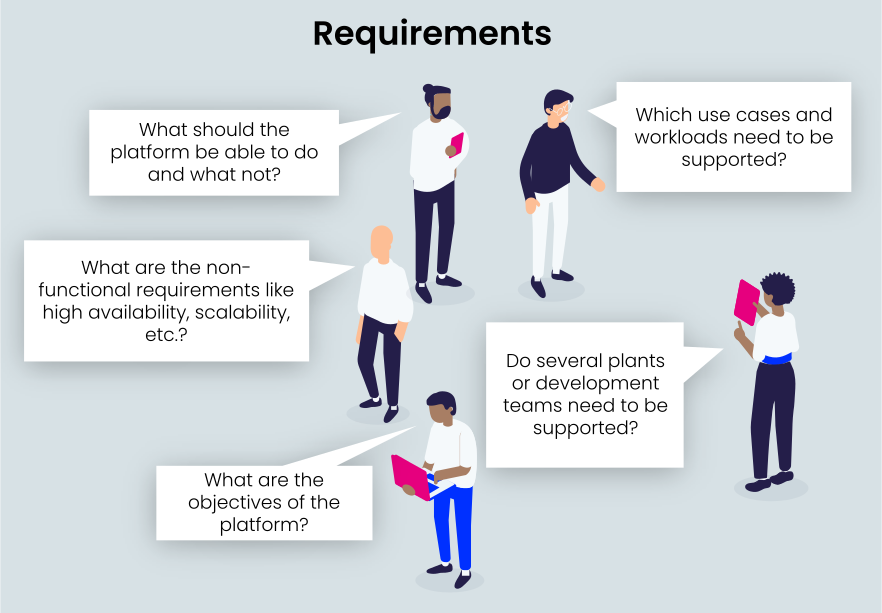
When a company is starting to plan their digital infrastructure, several requirements and constraints influence what an overall Smart Factory platform based on tools like Azure IoT Operations should look like:

Diagram illustrating the four types of constraints commonly used in business: Time, Cost, Scope and Quality.

On the one side there are requirements that are often specific to each company. These requirements include aspects like use cases and workloads or industrial protocols that need to be supported. Another aspect is whether multiple development teams will work on the platform.

Visual representation of the requirements of a software development project with detailed information on functions, deadlines and team responsibilities.

On the other side there also a specific constraints and requirement from infrastructure, security and networking perspective. Examples would be topics like network segmentation, existing digital infrastructure or security guidelines that need to be considered.

No more PoCs.
Instead build a MVP.

Building a smart factory is as much about people as it is about technology. Even the most flexible and scalable infrastructure will be useless, when the people are missing that define and build use cases that crate actual value for the users and the company. When we work together with manufacturing clients on their Smart Factories, we follow a 4 step approach that reflects this and brings together people and technology:

In the Solution Assessment we…

  • educatate on the success factory and core concepts for a Smart Factory 
  • create guide our customers to define an aligned product vision & roadmap  
  • define Core capabilities and constraints 
  • create a high level overview of potential use cases and specify an initial use case for the MVP pahse 
  • make a fit gap analysis and define the tools set, that are best suitable for our clients
  • define the Smart Factory architecture & tech stack 
  • define the MVP scope 
  • prepare the implementation phase

We build a Minimum Viable Product: 

Iteration & Progressive Handover

Our references & projects

A reference is worth more than a thousand words. Luckily, we have dozens of them. Click through a selection of our most exciting projects and see for yourself!

  • A fleet of self-driving trucks from MAN on a spacious test site.
    MAN - ATLAS L4. Control Center for the autonomous truck
    To the MAN reference
    CloudData/Data PlatformsApps

    Control center for the technical monitoring of driverless trucks

    To the MAN reference

    UX design, product strategy, data structure, vehicle data visualization

    To the MAN reference

    Monitoring, remote support, mission management, reports for commercial autonomous transport solutions

    To the MAN reference
  • Two people in white protective suits stand in front of a pipeline through which green glowing data streams are pumped
    NETZSCH: Development of an IoT platform
    To the NETZSCH reference
    CloudData/Data PlatformsIoT

    Unified IoT platform for 3 business units, harmonization of existing IoT solutions

    To the NETZSCH reference

    IoT device connectivity, visualization software for data analysis, cloud infrastructure, operations

    To the NETZSCH reference

    Quick testing in the cloud infrastructure, fast integration of use cases such as predictive maintenance, process optimizations, etc.

    To the NETZSCH reference
  • A modern high-rise building with an eye-catching orange-purple color gradient featuring a central, transparent exterior elevator unit.
    TK Elevator: Health Check Connectivity for the IoT gateway of elevators
    To the TKE reference
    CybersecurityIoTEmbedded Systems & Robotics

    IoT gateway (MAX Box) for data connection between elevator & IoT platform

    To the TKE reference

    Examination of code quality, architecture, operations & organization

    To the TKE reference

    Optimization of IoT gateway connectivity & digitalization of elevators

    To the TKE reference
  • A person stands on a platform at sunset with digitally superimposed graphics.
    inCTRL Solutions: Modernization of the IoT platform for water treatment plants
    To inCTRL reference
    CloudIoTIT Modernization

    IoT & software modernization, integration of new functions

    To inCTRL reference

    Data warehouse setup, integration of microservices, automated quality assurance, Continuous Integration & Continuous Deployment (CI/CD)

    To inCTRL reference

    Improved resilience, maintainability & further development capability of the platform

    To inCTRL reference
  • A red MAN truck drives along an empty road under a clear night sky with shining stars.
    MAN: Efficient threat analysis for control units
    See MAN reference
    CybersecurityIoTEmbedded Systems & Robotics

    Protection of digitalized trucks against virtual attacks

    See MAN reference

    Risk analysis based on 4x6 methodology, ThreatSea, ISO21434

    See MAN reference

    Quick identification of relevant threats for immediately effective security measures

    See MAN reference
  • Person uses Miele app in modern kitchen.
    Miele domestic appliances are networked worldwide
    See Miele reference
    CloudIoTEmbedded Systems & Robotics

    Further development of the IoT platform for connected home appliances

    See Miele reference

    Container-based architecture, open standards, modular design

    See Miele reference

    Quick availability & scalability of digital services, high added value for users

    See Miele reference
  • Header_Stiehl-IMOW-16-9
    STIHL: Control iMOW robotic mower via app
    See STIHL reference
    CloudAppsIoT

    Control and configuration of the robotic mower via smartphone

    See STIHL reference

    Development of app, web, cloud platform and direct Bluetooth communication

    See STIHL reference

    Digital benefits for users, app controllability, remote software updates

    See STIHL reference
  • Header_ifm
    ifm services: Remote maintenance of systems and machines
    See ifm services reference
    CloudIoTEmbedded Systems & Robotics

    Fully integrated remote access in the IoT platform

    See ifm services reference

    Full stack cloud application, RUST-based clients, UX design

    See ifm services reference

    Analysis of sensor data from production as a basis for sustainable decisions for customers

    See ifm services reference
  • Control unit in an automated factory environment.
    Monitoring alarms in industrial plants
    See reference
    CybersecurityIoTEmbedded Systems & Robotics

    Live monitoring platform for visualizing connected warning devices

    See reference

    Automation & cloud services (MS Azure), API management

    See reference

    Alarms visible worldwide within seconds, multi-tenant system

    See reference
  • The dashboard of a car shows a display with a notification about a remote software upgrade.
    BMW Group: Remote software upgrade for vehicles
    See BMW Group reference
    CloudCybersecurityIoT

    Software upgrades without the need to visit a service center

    See BMW Group reference

    Backend system for over-the-air communication with the vehicle, 24/7 support

    See BMW Group reference

    IT security, more comfort, on-demand provision of new features

    See BMW Group reference
  • Technician installs solar panel on roof at sunset
    SMA: Development of a Web UI for ennexOS platform
    See SMA reference
    Digital Design/UX DesignIoTWeb & Portal Platforms

    Creation of a unified customer experience across all products, smooth generational transition for customers, secure, agile operation

    See SMA reference

    WebUI for the digitalization & automation of energy management processes, open-source solution for energy flow visualization

    See SMA reference

    Energy flow & cost optimization, operational reliability, customer-friendliness

    See SMA reference
  • A person stands in a modern, abstract room and holds a tablet in their hands.
    Weidmüller: Progression of the Industrial Service Platform
    See Weidmüller reference
    CloudIoTWeb & Portal Platforms

    Creation of a centralized, intuitive, expandable portal as the foundation for industrial applications (remote access, data visualization, ML)

    See Weidmüller reference

    Exploration, setup & further development of the base platform for industrial services

    See Weidmüller reference

    Innovative portal for end-to-end solutions, MVP in just 7 months

    See Weidmüller reference

Why MaibornWolff?

As one of the most innovative IT service providers with a great passion for AI, we focus entirely on the project business and individual software development - without our own products. To stay at the forefront, we continuously invest in our team of digital technology engineers and develop digital solutions that are well thought-out, efficient and reduced to the essentials.

Our principle: simplicity instead of complexity. We only develop what is really needed - tailor-made, useful and reliable. Our results speak for themselves. With over 800 large-scale systems and more than 10,000 person-years of experience in high-end software engineering, we are one of the few who can reliably implement even the largest and most complex IT landscapes. Thanks to close partnerships with leading hyperscalers, our customers operate their solutions in today's most modern and powerful environments.

Less technology. Better Business.

Find what suits you best
Refine your search
clear all filters