Digital drawing of a cloud architecture on a tablet.

Understanding and making the most of cloud architectures

Estimated reading time: 10 minutes

30% Cloud-Budget sparen und IT-Kosten nachhaltig reduzieren.
HomeKnow-HowCloud architecture
Author: Maximilian Schaugg

Cloud architecture is the structural design that defines how all IT components—such as servers, storage, and networks—interact within a cloud computing environment. It is the key lever for efficiently scaling IT resources and sustainably reducing operating costs.

The most important points at a glance
  • What is a cloud architecture? It is the technical blueprint for modern IT solutions and defines how servers, storage, and networks work together. Strategic planning enables companies to efficiently scale resources and sustainably reduce operating costs.
  • How is a cloud computing architecture structured? The system is based on three layers: hardware, virtualization, and applications. These layers work seamlessly together to abstract physical resources and deliver services flexibly over the network.
  • Which service models (IaaS, PaaS, SaaS) are relevant? The models differ in the level of control: IaaS provides basic infrastructure, PaaS offers development tools, and SaaS delivers ready-to-use software. The choice depends on how much management a company wants to handle itself.
  • Which cloud model (public, private, hybrid) is suitable and when? The decision depends on compliance requirements and scalability needs. While the public cloud offers maximum agility, the private cloud ensures the highest level of data sovereignty; hybrid and multi-cloud approaches combine the advantages of both.
  • How are security and costs controlled in the architecture? Through Zero Trust architectures and consistent cost monitoring (FinOps). Modern designs integrate security mechanisms such as IAM directly into the structure and use autoscaling to avoid uncontrolled spending caused by unused resources.

What is a cloud architecture?

A cloud architecture is the technical blueprint for modern, connected IT solutions. It defines the structural interaction of servers, storage, networks, and software within a cloud computing architecture in order to deliver resources efficiently.

Compared to on-premises systems, this structure enables maximum scalability and optimized costs. While a “lift-and-shift” approach merely relocates existing apps, a strategic architecture ensures the full utilization of all cloud advantages.

Central to modern concepts is the cloud-native approach. It is designed to build applications so that they use resources in an automated way, integrate seamlessly, and scale precisely during peak loads.

The three layers of a cloud architecture

Every modern cloud computing architecture is based on a multi-layered system. This structure distributes specialized tasks such as compute power, data management, and security across different layers in order to ensure an efficient overall system.

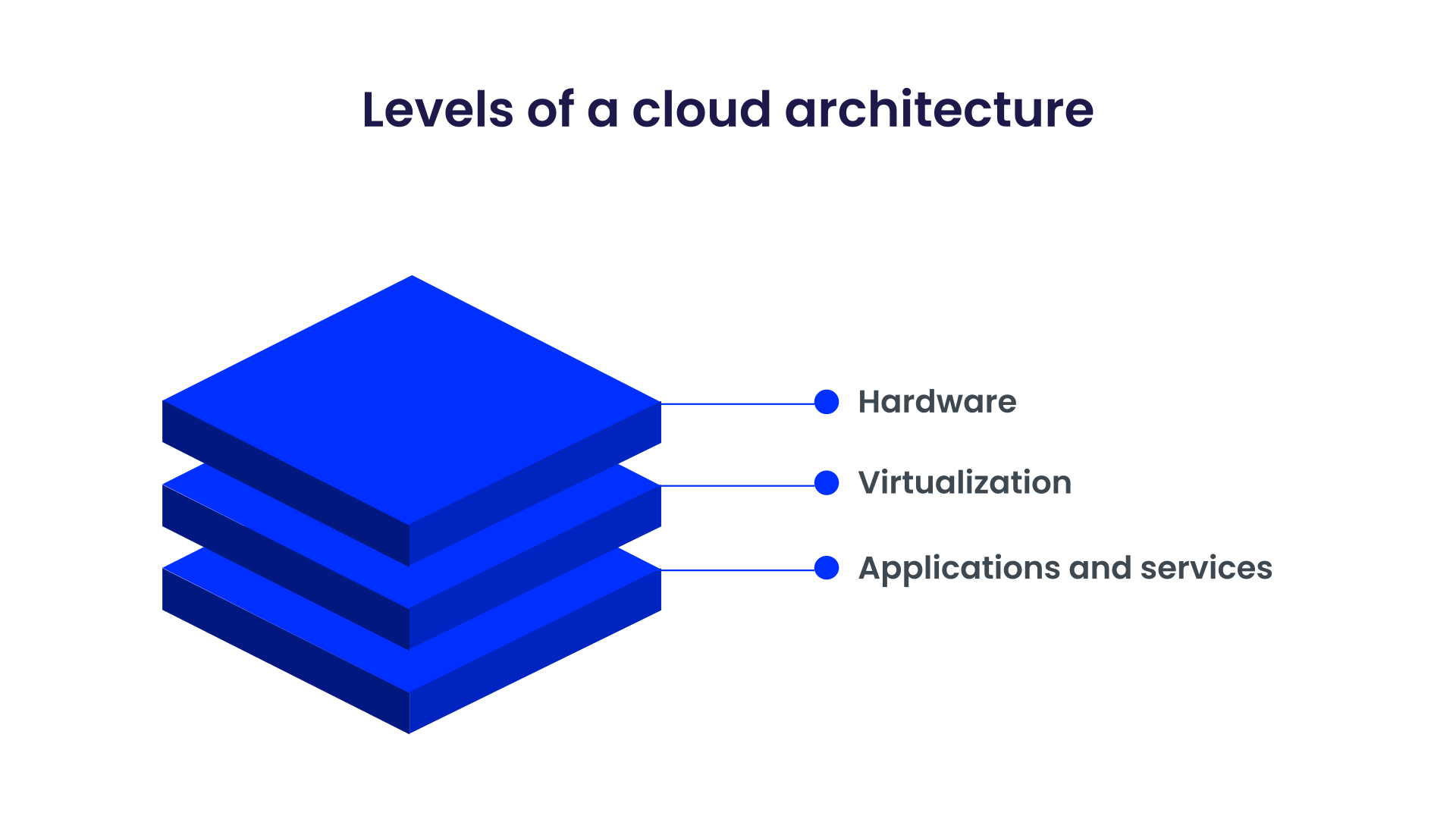
Level of a cloud architecture: hardware, virtualisation, applications and services.

The structure of a cloud architecture is divided into three fundamental layers:

  • Hardware: Physical servers, storage, and network devices form the resilient foundation for cloud operations.
  • Virtualization: This layer abstracts physical resources into virtual instances. This enables shared hardware utilization and significantly increases efficiency.
  • Applications and Services: This layer coordinates user requests from the frontend. It provides resources, development tools, or software solutions depending on the service model.

Through the seamless interaction of these layers, highly flexible IT environments are created that can precisely adapt to fluctuating demands.

What components make up a cloud architecture?

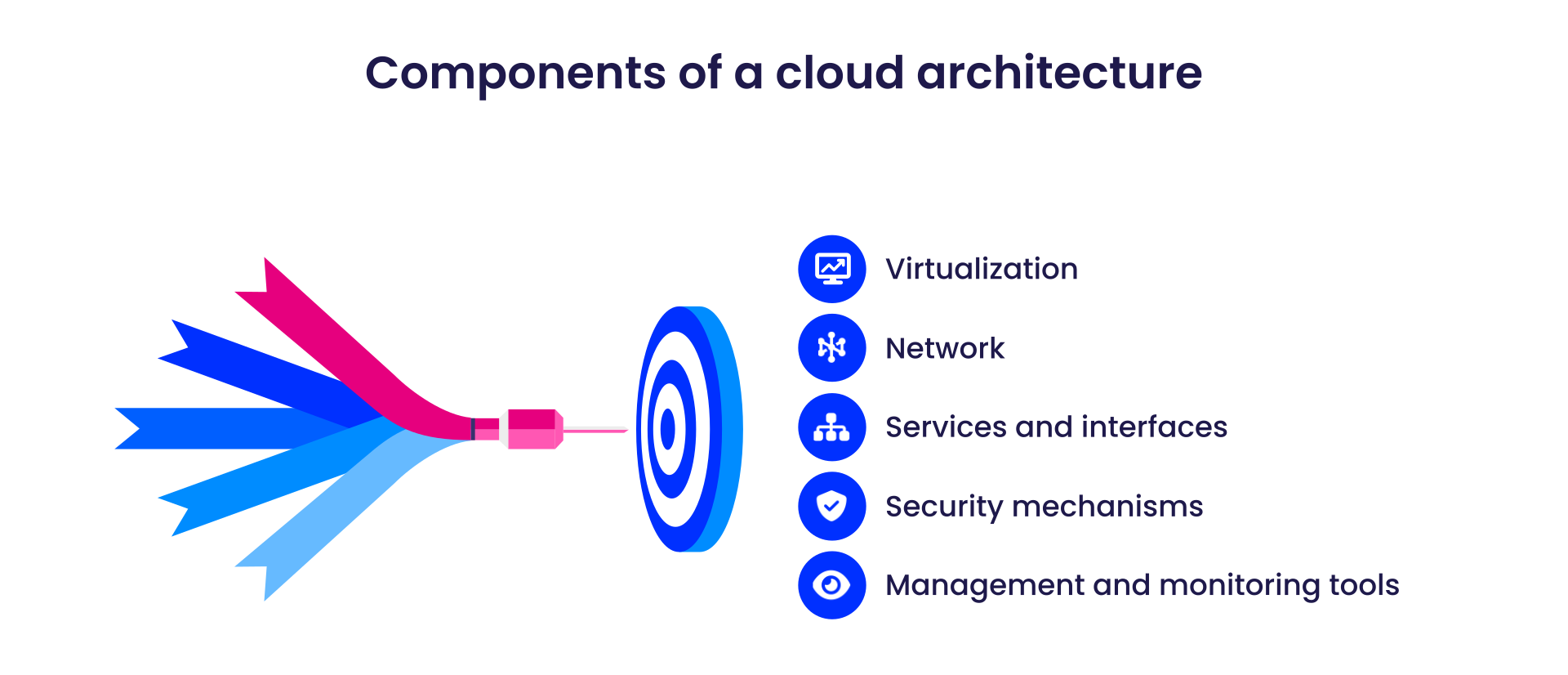
A high-performance cloud architecture integrates five core components to ensure scalability and stability. These building blocks form the technical backbone of every modern cloud computing architecture.
Components of a cloud architecture: network, security, management and services.

1. Virtualisation

Virtualization is the foundation of cloud architecture. With the help of hypervisors, it abstracts physical hardware into independent virtual machines (VMs), which optimizes resource utilization.

This technology enables maximum flexibility in provisioning and ensures secure isolation of individual workloads. It also forms the technological basis for modern container solutions.

2. Network

3. Services and interfaces

4. Security mechanisms

5. Management and monitoring tools

A person standing on a mountain peak symbolises accessibility through cloud architecture.
MaibornWolff accompanies you into the cloud!

Together, we will find the cloud solution that suits your requirements.

How do the components of a cloud architecture interact?

Interaction in a cloud architecture occurs through the seamless exchange of data between frontend and backend over a secure network. While the frontend includes the user interface, the backend provides all resources, storage, and applications.

User requests are transmitted to the backend via interfaces (APIs) and middleware. The method of provisioning and the scope of managed resources largely depend on the chosen service model.

The 3 core cloud service models

Within a cloud computing architecture, service models determine the level of control and responsibility. Depending on the model, the provider takes over different layers of infrastructure management.

1. Infrastructure as a service (IaaS):

IaaS provides fundamental IT resources such as virtual servers, storage, and networks on demand. Companies use it to run scalable infrastructures without investing in their own hardware.

  • Use Case: Hosting databases or virtual machines (VMs) to handle peak loads in e-commerce.

2. Platform as a service (PaaS):

PaaS provides a complete environment with software tools for developing and managing applications. Developers can focus on the code while the cloud platform automatically manages operating systems and middleware.

  • Use Case: Efficient creation and testing of web apps or APIs in agile development projects.

3. Software as a service (SaaS):

SaaS delivers ready-to-use applications directly through the browser, which are fully hosted and maintained by the provider. Users benefit from immediate usability without local installations or updates.

  • Use Case: Using everyday business tools such as email services, CRM systems, or office software.

What types of cloud architecture are there?

Companies choose their cloud architecture based on compliance requirements, budget, and scalability needs. In general, four established models can be distinguished within a cloud computing architecture.

Comparison of cloud models

Model

Key Characteristic

Ideal For (Examples)
Public cloud

Resources are shared with other users over the internet (multi-tenancy).

Startups, e-commerce, and streaming services.
Private Cloud

Exclusive IT infrastructure for a single organization, providing maximum control.

Financial sector, government agencies, and healthcare.
Hybrid-Cloud

Combination of private and public cloud for maximum flexibility.

Automotive industry and retail with mixed workloads.
Multi-Cloud

Combination of services from different providers to avoid vendor lock-in.

Large enterprises and research-driven pharmaceutical companies.

Advantages and disadvantages of cloud models

Choosing a specific cloud architecture is always a trade-off between agility and control. While the public cloud stands out for its scalability, the private cloud offers the highest level of data security.

  • Public Cloud: Excels with low entry costs and easy access to AI technologies. However, it comes with dependency on third-party providers and complex compliance requirements.
  • Private Cloud: Provides maximum infrastructure control and security for sensitive data. However, it requires high investment costs and specialized personnel.
  • Hybrid Cloud: Enables local storage of critical data while leveraging cloud scalability. However, the integration effort can be technically demanding.
  • Multi-Cloud: Minimizes the risk of outages through provider diversification. However, it increases management complexity and can make cost transparency more difficult.

Which cloud architecture fits which industry?

The choice of the right cloud architecture largely depends on regulatory requirements and scalability needs. Depending on the sector, different models provide the necessary balance between agility and security.

  • Public cloud solutions are ideal for startups, e-commerce, and streaming services. These industries benefit from instant scalability during peak loads and low entry costs, which is also advantageous for educational institutions offering online courses.
  • Private cloud environments are essential for the financial sector, government agencies, and healthcare. The focus here is on maximum control over sensitive citizen or patient data as well as strict compliance with regulatory requirements.
  • Hybrid and multi-cloud strategies have proven effective in the automotive and pharmaceutical industries. They allow highly sensitive research data to be kept in protected environments while flexibly adding global computing capacity for complex analyses.
 A person standing on a mountain peak symbolises accessibility through cloud architecture.
We help you find the right solution for your requirements and accompany you every step of the way to the cloud.

How do I choose a cloud architecture?

Choosing the optimal cloud architecture depends on the individual balance between agility, control, and budget. A well-informed decision is based on analyzing workloads, compliance requirements, and internal resources within the cloud computing architecture.

Use these five key criteria for your evaluation:

  • Workload profile: Determine the required compute power and storage capacity to decide between fixed instances (IaaS) or highly scalable platforms (PaaS).
  • Security requirements: Industry-specific regulations (e.g., in the financial sector) often make a private or hybrid cloud mandatory.
  • Integration capability: Assess how seamlessly legacy systems can be connected with modern cloud services.
  • Budget & cost efficiency: Compare initial migration costs with long-term savings achieved through automated cloud services.
  • Available know-how: Decide whether to manage infrastructures internally or reduce operational complexity through managed services (SaaS/PaaS).

For preparation, MaibornWolff recommends data-driven capacity planning. Monitoring tools identify peak loads and resource-heavy processes to avoid overprovisioning your new cloud architecture from the outset.

Cost management in cloud architecture

Efficient cost management is an integral part of a stable cloud architecture. Since cloud resources are billed according to the pay-as-you-go principle, the architectural design itself determines the long-term cost efficiency of the cloud computing architecture.
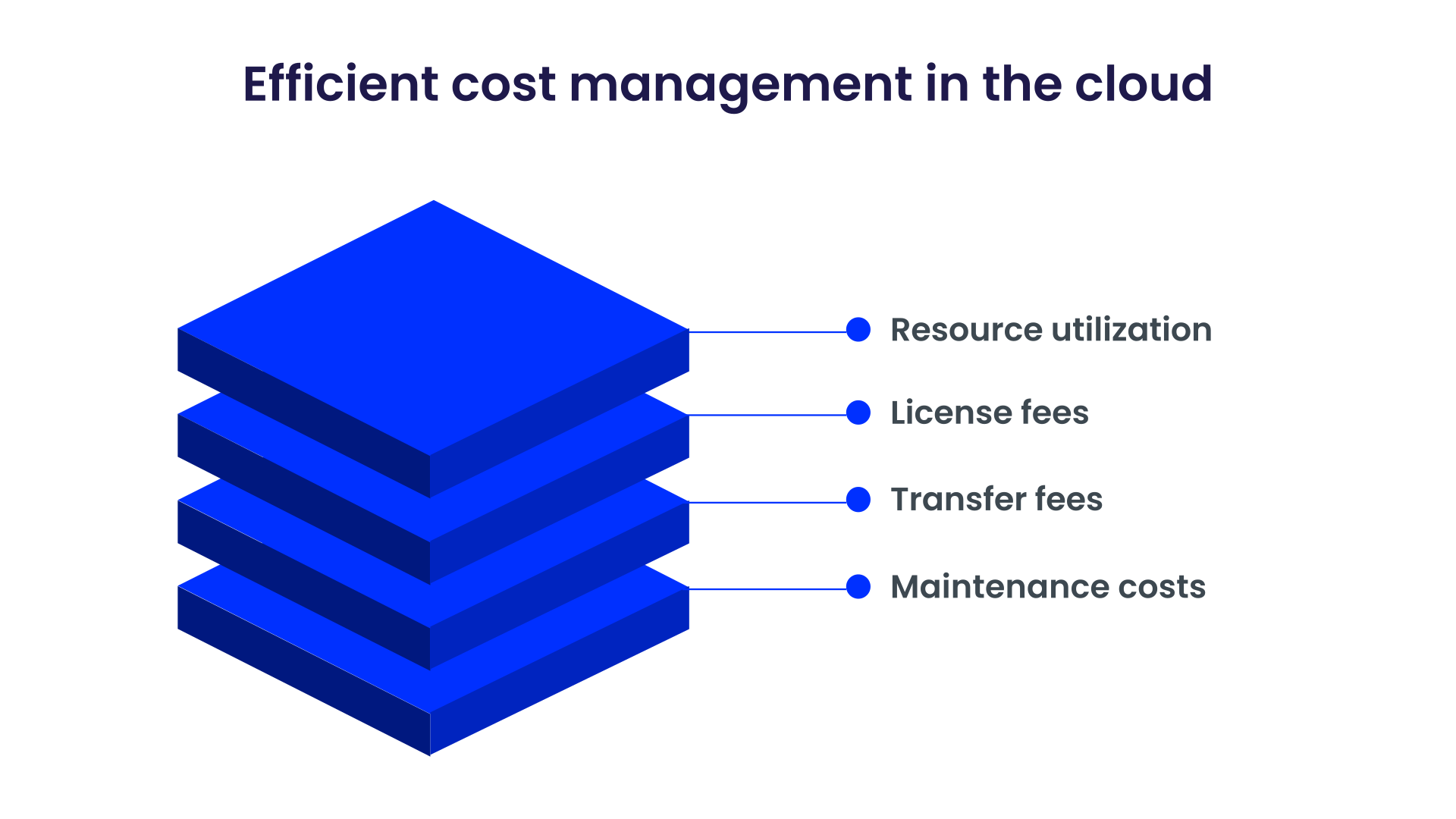
Efficient cost management in the cloud architecture: resources, licence and transfer fees.

To avoid uncontrolled cost growth, architects should prioritize the following factors:

  • Resource governance: Use automatic scaling (autoscaling) and precise budget limits to avoid overcapacity and costly misconfigurations.
  • Avoiding hidden fees: Plan for costs related to data transfers (egress fees) between regions as well as the continuous storage growth of unused data.
  • Efficient migration: Consider initial investments required to adapt legacy systems so that native cost advantages in the cloud environment can be fully utilized.

For accurate calculations, providers such as AWS, Azure, or Google offer special cloud cost calculators. Combined with continuous monitoring, these tools enable precise cost control and help prevent additional services for security or analytics from unexpectedly impacting the budget.

Ein aufgeschlagenes Magazin neben seinem Titelblatt, das Cloud-Kostenmanagement thematisiert.
Keeping cloud costs under control

Quick Wins & Strategic Leverage for IT Leaders. Available in German language.

The strategic importance of cloud architecture

A precisely planned cloud architecture is the foundation for scalability, data security, and long-term cost efficiency.The choice between public, private, or hybrid models determines how agile a company can respond to market changes within its cloud computing architecture.

A key prerequisite for success is an architecture that seamlessly integrates industry-specific compliance requirements and future technology trends such as AI. Companies that consider these strategic factors today build a future-proof IT infrastructure that grows with the demands of the digital market.

Person steht auf Berggipfel symbolisiert die Erreichbarkeit durch Cloud Architektur.
We show you how to keep your cloud costs under control.

We will show you which tools you need and help you with any other questions you may have about the cloud and cloud architecture. Arrange a free initial consultation with our cloud experts.


Frequently asked questions about cloud architecture

  • 1. What Is a Cloud Architecture?

    A cloud architecture is the technical blueprint for modern IT solutions. It defines the structural interaction of servers, storage, and networks within a cloud computing architecture. The goal is to provide resources efficiently, sustainably reduce IT costs, and ensure maximum scalability for applications.
  • 2. What Advantages Does the Cloud-Native Approach Offer Compared to Lift-and-Shift?

    While lift-and-shift moves existing applications with only minimal adjustments, the cloud-native approach optimizes software specifically for the cloud. Applications use resources in an automated way, integrate seamlessly, and scale precisely during peak loads. This unlocks the full potential of a modern cloud architecture compared to on-premises systems.
  • 3. What Is the Difference Between IaaS, PaaS, and SaaS?

    Infrastructure as a Service (IaaS) provides basic resources such as virtual servers.

    Platform as a Service (PaaS) additionally offers developers tools for application management.

    Software as a Service (SaaS) delivers ready-to-use applications directly through the browser.
    The choice determines the level of control within the cloud computing architecture.

  • 4. What Hidden Costs Can Occur in Cloud Models?

    In addition to monthly subscription fees, costs often arise from data transfer charges (egress fees) between regions or clouds. Storage growth from unused data as well as expenses for initial migration and performance optimization can also impact the budget. Efficient monitoring is therefore essential for any cost-effective cloud architecture.

  • 5. What Is the Zero Trust Principle in the Cloud?

    The Zero Trust principle follows the rule: “trust no one, verify everything.” In a secure cloud architecture, every access request is strictly authenticated and continuously monitored. This protects resources from unauthorized access and data loss, regardless of whether the request originates from the internal network or external sources.

  • 6. What Characterizes a Multi-Cloud Architecture?

    In a multi-cloud architecture, companies run services from different cloud providers in parallel. This avoids dependencies on a single provider (vendor lock-in) and increases resilience by distributing workloads. It also allows specific applications to be matched with the provider offering the best performance.
Author: Maximilian Schaugg

Maximilian Schaugg has been working on cloud projects at MaibornWolff since July 2018. He specialises in the design, implementation and operation of cloud and container solutions in existing and new IT infrastructures. An important part of his work is focusing on the needs of his customers and taking a holistic approach to successfully completing projects from start to finish. In recent years, he has focused particularly on cloud migration, cloud consulting and cloud platform development, where he has been able to apply and further deepen his in-depth knowledge, especially in the critical areas of security, cost efficiency and governance.

Find what suits you best
Refine your search
clear all filters